
Choosing a safe bathing aid is not only about finding the lightest frame or the lowest price. A reliable Aluminium Bath Chair should provide steady support, comfortable seating, and enough clearance for the bathtub. Its aluminium frame should resist everyday moisture, while rubber feet should grip the floor without leaving obvious marks. Small details matter here.
This guide examines seven Aluminium Bath Chair options for older adults, people recovering from injury, and anyone who feels unsteady while bathing. Each model deserves attention for its weight capacity, seat width, height adjustment, drainage holes, back support, and transfer design. A chair that looks stable in a photograph may feel less secure on a wet bathroom floor. That difference is important.
Practical selection also requires measuring the bathtub before ordering. Check the chair’s total width, seat height, and distance between support legs. Confirm the manufacturer’s weight limit, assembly instructions, warranty, and cleaning guidance. A shower chair should never replace professional advice when balance problems are severe. Speak with a healthcare professional if transfers are difficult or painful.
No chair is perfect. Some models feel sturdy but are heavy to move, while lighter designs may need more careful positioning. The best choice depends on the user, bathroom layout, and daily routine. We will compare the strengths, limitations, and overlooked details that can affect safe bathing in real homes.
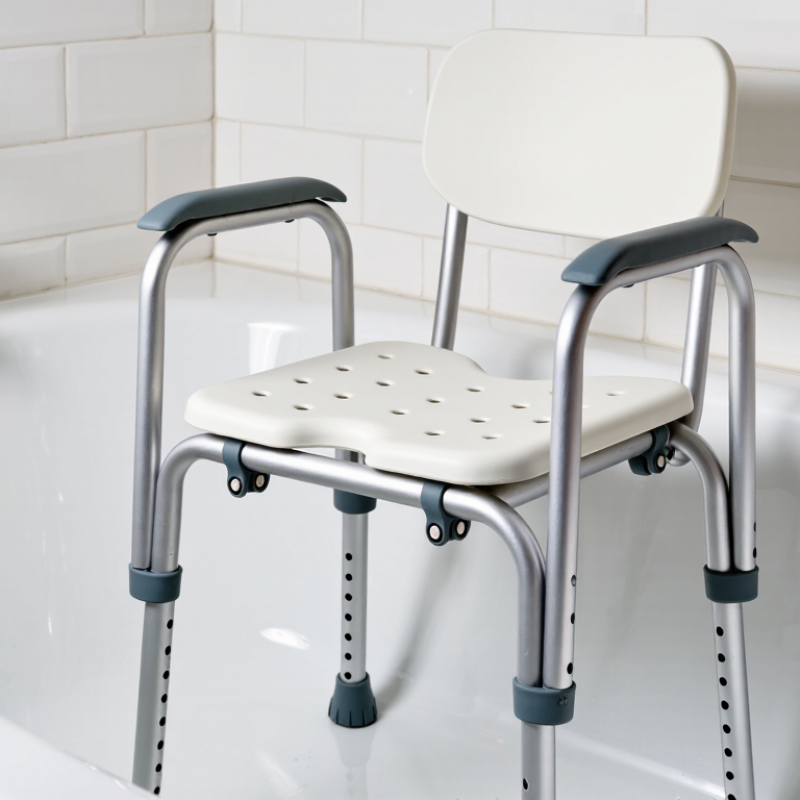
An aluminium bath chair is a lightweight shower seat made with a rust-resistant metal frame. It usually includes adjustable legs, drainage holes, and non-slip rubber feet. The design lets a user sit while washing, reducing standing time on wet flooring. Aluminium is practical, but it is not automatically safer. Stability depends on correct height, level flooring, secure feet, and the user’s weight.
Who needs one? Older adults with reduced balance may benefit, especially because the CDC reports that more than one in four adults aged 65 and older falls each year. People recovering from hip, knee, or foot surgery may also need temporary support. It can help users with arthritis, muscle weakness, dizziness, or neurological conditions. A caregiver may find transfers easier, but a bath chair cannot replace proper supervision or transfer training.
The WHO and UNICEF Global Report on Assistive Technology (2022) estimates that over 2.5 billion people need at least one assistive product worldwide. That figure may exceed 3.5 billion by 2050. A bath chair is a small solution within that wider need. Check the user’s posture, reach, and ability to stand before choosing one. The safest model is not always the largest or most expensive. A professional assessment is wiser when strength changes quickly. Even then, mistakes happen. A chair can slide if the rubber tips are worn, fitted unevenly, or placed on a bath mat. Inspect the frame regularly, and never ignore a loose adjustment pin.
| Chair Type | Best For | Typical Overall Size | Seat Height | Typical Weight Capacity | Main Features | Who May Need It |
|---|---|---|---|---|---|---|
| 1. Height-Adjustable Shower Stool | Compact bathrooms and occasional support | Approximately 46–51 cm wide × 46–53 cm deep | Approximately 43–53 cm | 100–136 kg | Lightweight aluminium frame, non-slip rubber feet, drainage holes, tool-free height adjustment | People who can sit down and stand up independently but need reduced fatigue while bathing |
| 2. Padded Bath Seat | Users who need extra comfort or pressure relief | Approximately 46–54 cm wide × 46–56 cm deep | Approximately 45–55 cm | 100–136 kg | Water-resistant padded seat, corrosion-resistant aluminium legs, textured ferrules, rounded edges | Older adults or people with joint pain who find hard plastic uncomfortable |
| 3. Shower Chair with Backrest | Users who need trunk support and a more stable seated position | Approximately 51–56 cm wide × 51–58 cm deep | Approximately 43–53 cm | 100–136 kg | Supportive backrest, drainage seat, adjustable legs, wide non-slip feet | People with balance limitations, weakness, dizziness, or reduced standing tolerance |
| 4. Heavy-Duty Bariatric Bath Chair | Higher body-weight users who require a wider, stronger seat | Approximately 56–66 cm wide × 53–61 cm deep | Approximately 43–53 cm | 136–204 kg, depending on the tested model | Reinforced aluminium frame, wider seat, strong cross-bracing, high-capacity rubber feet | Users whose weight or body width exceeds the practical limits of standard shower chairs |
| 5. Transfer Bath Chair with Sliding Seat | Safer transfers in and out of a bathtub or shower area | Approximately 68–76 cm wide × 51–61 cm deep | Approximately 48–58 cm | 100–136 kg | Sliding or swivelling seat, locking mechanism, arm supports, adjustable frame, transfer clearance | People who cannot safely step over a high bathtub wall or pivot while standing |
| 6. Folding Aluminium Bath Chair | Small homes, travel, or occasional use | Open: approximately 46–53 cm wide × 46–53 cm deep; folded depth varies | Approximately 43–53 cm | 100–120 kg | Folding frame, lightweight construction, drainage openings, locking hinges, rubber feet | Users who need to store the chair between uses or transport it between locations |
| 7. Shower Commode Chair | Users needing toileting support during bathing | Approximately 56–66 cm wide × 66–76 cm deep | Approximately 48–58 cm | 100–159 kg, depending on the tested model | Water-resistant seat, removable commode opening, locking casters or fixed feet, armrests, backrest | People with limited mobility who need combined showering and toileting assistance |
Dimensions and weight capacities shown are typical ranges for aluminium bathing chairs and can vary by design. Always follow the specific product's instructions and safety rating.
Aluminium bath chairs can feel light, but low weight does not guarantee stability. Check the frame for firm joints, smooth edges, and corrosion-resistant treatment. The legs should have wide, non-slip rubber feet that remain flat on a wet floor. Small, replaceable tips are useful when they wear down. They matter more than many people expect.
Measure the bath before ordering. Confirm the chair’s width, seat depth, and height range against the available space. Adjustable legs can help position the user safely, but loose adjustment pins create danger. Test every pin before use. The stated weight capacity should exceed the user’s weight, not merely match it. A little spare capacity is sensible.
Look for drainage holes in the seat. Standing water can make transfers uncomfortable and increase slipping risk. A supportive back and armrests may help users with weak balance, although armrests can obstruct a narrow bath. Check whether the chair can enter and leave the tub without twisting the body. That detail is often missed.
Try the chair with normal bathroom movements. Sit slowly, reach for the tap, and stand without pulling the towel rail. Do not assume a chair suits everyone. An occupational therapist or qualified healthcare professional can assess transfer ability and bathroom layout. Read the care instructions, inspect the feet weekly, and replace damaged parts promptly. Safety checks are easy to postpone. That is the problem.
Comparing the seven best aluminium bath chairs requires more than checking the frame material. Aluminium resists rust, but stability depends on the complete design. Examine each chair’s weight capacity, seat width, seat depth, and height range. A heavier user may need reinforced tubing and a wider base. However, maximum capacity does not automatically mean better balance.
The CDC reports that about one in four adults aged 65 and older falls each year. This makes grip, drainage, and transfer support important comparison points. In a practical assessment, test whether the rubber feet stay flat on a wet floor. Check the adjustment pins for clear locking positions. A backrest can improve comfort, while armrests may assist standing. Yet bulky arms can restrict side transfers. The best option depends on the bathroom layout and the user’s movement ability. There is no perfect chair.
Tips: Measure the bath first. Leave space for turning. Compare seat height with the user’s knee level. Review the manufacturer’s cleaning instructions, because soap residue can reduce foot traction. The World Health Organization identifies falls as a major cause of injury among older adults, so small design details deserve attention. Look for smooth welds, secure fittings, and drainage holes that prevent pooled water. Ask a qualified occupational therapist for a personalised assessment when balance is uncertain. A rushed choice can look acceptable in a showroom, but feel unstable beside a wet tub.
Setting up an aluminium bath chair takes only a few minutes, but careful preparation matters. Place it on a flat, clean bath surface. Check that every rubber foot touches the floor evenly. Adjust the legs until your knees sit slightly lower than your hips. The seat should feel stable, not tilted. Tighten each locking pin firmly, then press the seat with both hands. Do not skip this small test.
Run the bath water before sitting, and check its temperature with your wrist. Very hot water can cause dizziness, especially for older adults. Hold the chair’s armrests when lowering yourself. Move slowly and keep both feet inside the bath area. Sit upright, rather than leaning sharply to one side. Use a handheld shower if possible. It reduces twisting and unnecessary reaching. A trusted caregiver or healthcare professional can check the setup when balance is limited.
Keep soap and towels within easy reach, but never place them under your feet. Standing on a wet bath floor is risky. I still recheck the feet after cleaning because one loose pad can change the chair’s balance. That detail is easy to overlook. Dry the chair after use and inspect the frame for cracks, sharp edges, or loose fittings. Stop using it if anything feels unstable. Some users need more support than a bath chair provides. Reflect honestly on that need before bathing alone.
Cleaning and maintenance matter as much as the chair’s frame. The CDC reports that more than one in four adults aged 65 and older falls annually. A wet, poorly maintained seat can increase that risk.
After each bath, rinse away soap and mineral residue with clean water. Use mild detergent and a soft cloth. Avoid abrasive pads, strong acids, and concentrated chlorine cleaners. They may damage aluminium finishes and weaken rubber components. Dry the frame, joints, and drainage holes completely. Water trapped inside tubing can remain unnoticed.
During a practical inspection, check every rubber foot before use. It should sit flat, grip firmly, and show no splitting. Test the seat for movement, then inspect rivets, screws, backrests, and height pins.
The World Health Organization records about 684,000 fatal falls globally each year, with older adults facing the greatest risk. This makes a loose fitting more than a small inconvenience. Follow the stated load limit. Do not assume a heavier frame is automatically safer. That assumption needs checking.
Tips: Clean weekly, even when the chair looks spotless. Replace the chair after bending, deep corrosion, cracked welds, unstable legs, or damaged feet. Replace parts only when they match the original size and load specification. If a fitting remains loose after adjustment, stop using the chair and seek professional advice. A rushed repair is not worth the risk.