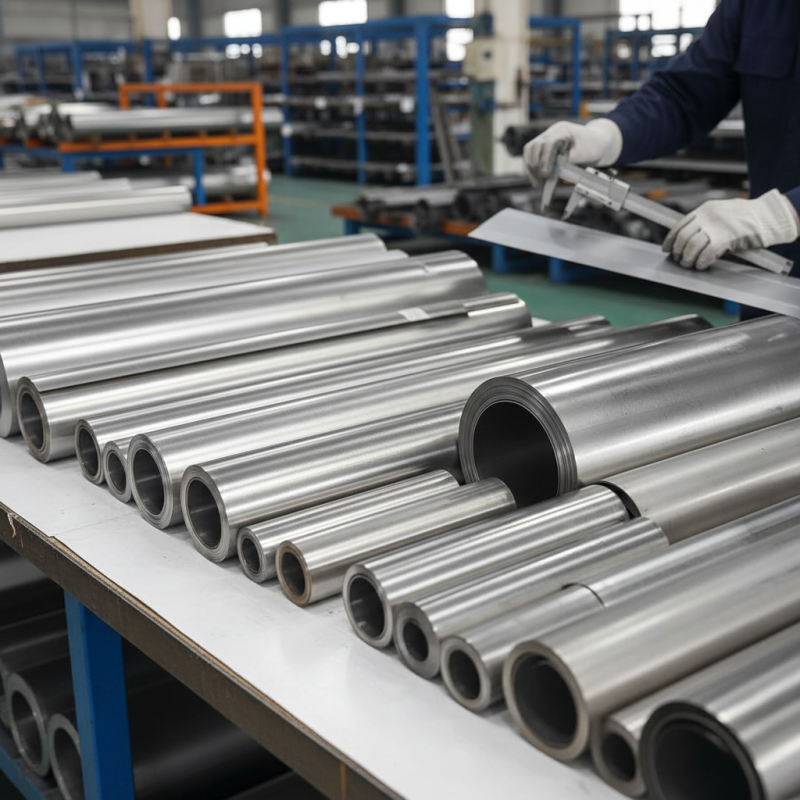
How to Choose the Best 430 Stainless Steel Strips for Your Needs?
Choosing the right 430 Stainless Steel Strips is crucial for various applications. These strips are widely appreciated for their corrosion resistance and strength. However, not every strip will meet your specific needs.
When selecting 430 Stainless Steel Strips, consider factors such as thickness, width, and finish. These details can significantly affect performance. For instance, a thicker strip may provide better durability but could be more challenging to work with. Don't overlook the importance of sourcing from reliable suppliers. This ensures you receive high-quality materials.
Additionally, reflect on your intended use. Will the strips be exposed to harsh environments? Understanding your application helps narrow down choices. Don't rush the decision-making process. Take the time to weigh your options carefully. After all, the wrong choice may lead to unnecessary costs and complications later on.
Understanding the Properties of 430 Stainless Steel Strips
When selecting 430 stainless steel strips, understanding their properties is crucial. This alloy primarily consists of chromium, offering good corrosion resistance. Its magnetic properties are beneficial in numerous applications. The combination of strength and flexibility makes it suitable for various tasks.
430 stainless steel strips are noted for their durability. However, they may not be suitable for environments with high chloride exposure, such as coastal areas. Resistance to scaling and oxidation occurs at elevated temperatures, but it is still less resistant than other stainless steel grades. Users should evaluate whether this grade meets their performance requirements in specific conditions.
Another important consideration is the finish of the strips. The surface finish can affect both appearance and function. A polished surface may enhance corrosion resistance while providing an aesthetic appeal. If scratches or blemishes occur during processing, the effectiveness may diminish. Therefore, careful handling and storage are essential to maintain quality.
How to Choose the Best 430 Stainless Steel Strips for Your Needs? - Understanding the Properties of 430 Stainless Steel Strips
| Property | Description | Typical Uses |
| Corrosion Resistance | Moderate corrosion resistance; better than mild steel but not as good as 304 stainless steel. | Kitchen appliances, automotive parts, and decorative applications. |
| Magnetic Properties | Ferritic structure makes it magnetic, unlike many austenitic stainless steels. | Applications where magnetism is beneficial, such as magnetic assemblies. |
| Formability | Good formability; can be bent and shaped easily. | Manufacturing of various components and architectural elements. |
| Weldability | Fair weldability; can be welded, but may require preheating for thicker sections. | Construction and fabrication of stainless steel structures. |
| Heat Resistance | Good resistance to oxidation at high temperatures; not suitable for high heat applications. | Exhaust systems and heat exchangers. |
Identifying the Specific Applications for 430 Stainless Steel Strips
When considering 430 stainless steel strips, it helps to identify their specific applications. This grade is known for its good corrosion resistance and mechanical properties. It's commonly used in environments that require moderate resistance to oxidation and carburization.
One of the major applications of 430 stainless steel strips is in kitchen appliances. For example, these strips are often found in the construction of ranges, toasters, and sinks. They add durability and an appealing finish. However, they might not perform well in highly corrosive environments, such as near saltwater.
Another area is automotive components. Manufacturers utilize 430 stainless steel for trim, exhaust systems, and decorative pieces. Despite its advantages, users must be cautious. The appearance of surface rust can occur if not properly maintained. This is a common oversight that can compromise the aesthetic and performance of the metal. Reflecting on these applications can guide you towards the right choice for your projects.
Evaluating the Quality Standards for Stainless Steel Strips
When evaluating the quality standards for stainless steel strips, it’s crucial to understand the fundamental properties of stainless steel. The best 430 stainless steel strips provide a balance between corrosion resistance and strength. They should have minimal impurities and consistent thickness. Physical attributes matter, such as smoothness and uniformity across the strip. Scratches or blemishes can affect performance.
Quality certifications are essential. Look for products that adhere to international standards. Certifications often indicate the material's durability and safety. It's also wise to check for details like hardness and tensile strength. These are vital for applications requiring high strength. Remember to ask about the manufacturing processes. Poor techniques may lead to defects that compromise reliability.
Reflect on your specific needs. Consider the environment where the strips will be used. Test our assumptions about both material performance and supplier credibility. Rely on trusted sources for advice, but remain critical. Not all information is created equal. Engaging with professionals in the stainless steel industry can provide valuable insights.
Comparison of 430 Stainless Steel Strip Quality Attributes
Comparing Different Manufacturers and Their Offerings
When considering 430 stainless steel strips, it's crucial to evaluate various manufacturers. Each brings unique offerings to the table. Some prioritize corrosion resistance; others focus on thickness or finish. Understanding these differences can greatly affect your decision.
Tips: Look for manufacturers with transparent specifications. This ensures you know what you’re buying. Check reviews and testimonials. Real-world experiences can highlight reliability. Ask about quality assurance processes. A dependable manufacturer values their production methods.
While comparing options, keep in mind the diverse applications of 430 stainless steel. Some producers may excel in specific industries, like automotive or kitchenware. Be cautious—choosing based solely on price can lead to unsatisfactory results. A lower price may mean compromised quality. Consider the long-term benefits of investing in a reputable source.
Assessing Cost-Effectiveness and Budget Considerations
When considering 430 stainless steel strips, budget is a crucial factor. Understanding cost-effectiveness helps you make informed decisions. According to recent industry reports, the average market price for 430 stainless steel strips ranges from $1,200 to $2,500 per ton, depending on dimensions and quality. Lower-cost options might save money upfront, but quality could suffer.
The choice largely hinges on your specific needs. A lower price may not equate to lower overall cost. For example, inferior strips can lead to increased maintenance and shorter lifespan. This ultimately inflates expenses. Referring to ASTM standards is essential for ensuring the chosen product meets required specifications, thus enhancing durability while managing costs.
Key to managing your budget is evaluating long-term value. Investing slightly more in high-quality strips can yield better performance. A detailed cost analysis should account for potential repairs and downtime. Sometimes, a penny saved now can result in future headaches. The goal is to find the right balance between initial expenditure and lasting benefits.