How to Choose the Best Hydraulic Rotary Actuator for Your Needs?
Choosing the best hydraulic rotary actuator for your needs can be daunting. These devices play a crucial role in various industries, from manufacturing to automation. Understanding their key features and applications is essential for effective decision-making.
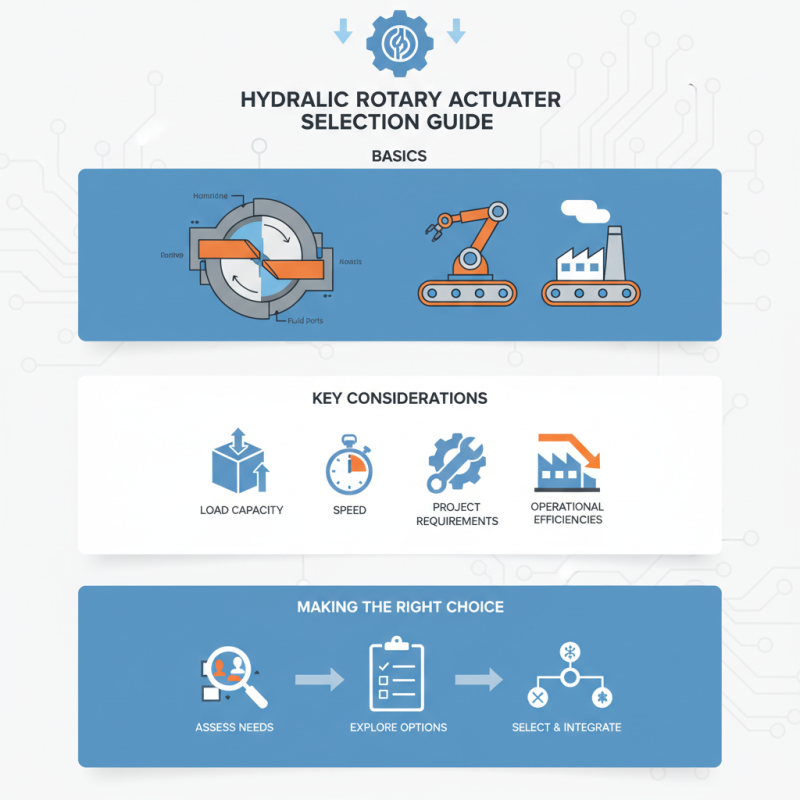
Hydraulic rotary actuators convert hydraulic energy into rotational motion. They come in various sizes and torque specifications, making it important to consider specific project requirements. While it may seem straightforward, many factors influence the right choice, such as load capacity and speed. Even experienced professionals can find it challenging to navigate these options.
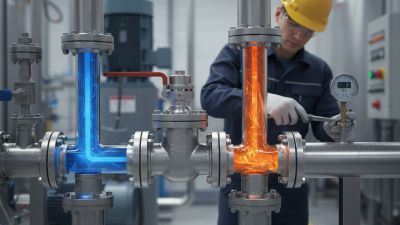
Consider real-world applications where improper actuator selection led to operational inefficiencies. Such oversights can result in wasted time and resources. The goal is not just to choose any hydraulic rotary actuator but to find one that aligns with your system's unique demands. This article will explore the vital elements to consider and expert insights to guide you through the selection process.
Understanding the Basics of Hydraulic Rotary Actuators
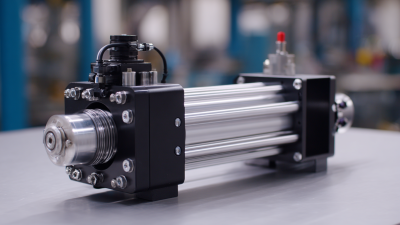
Hydraulic rotary actuators are essential in various applications. They convert hydraulic energy into rotary motion. Understanding their operation is crucial for selecting the right actuator for your project.
These devices typically consist of a cylinder and a rotating shaft. When hydraulic fluid enters the cylinder, it exerts pressure on the internal components. This pressure causes the shaft to rotate, generating torque. The range of motion and torque output varies significantly among different models. Small actuators might operate at low torque, while larger models can handle heavy loads.
When considering a hydraulic rotary actuator, think about your specific needs. Check load requirements and environmental factors. Consider the actuator's size and installation space. A proper fit is vital for efficiency and safety. Adjustments can be complex, and improper choices can lead to operational failures. Understanding these aspects will guide you towards making an informed decision. Sometimes, oversights in evaluation can result in costly mistakes. A careful review of your requirements is always beneficial.
How to Choose the Best Hydraulic Rotary Actuator for Your Needs?
| Parameter |
Description |
Typical Values |
| Torque |
The rotational force produced by the actuator. |
30 - 3000 Nm |
| Input Pressure |
The hydraulic pressure supplied to the actuator. |
10 - 200 bar |
| Rotation Angle |
The maximum angle the actuator can rotate. |
90° - 360° |
| Speed |
The speed at which the actuator can operate. |
10 - 50 degrees/second |
| Size |
Physical dimensions of the actuator. |
Compact to large sizes available |
Key Factors to Consider When Selecting a Hydraulic Rotary Actuator
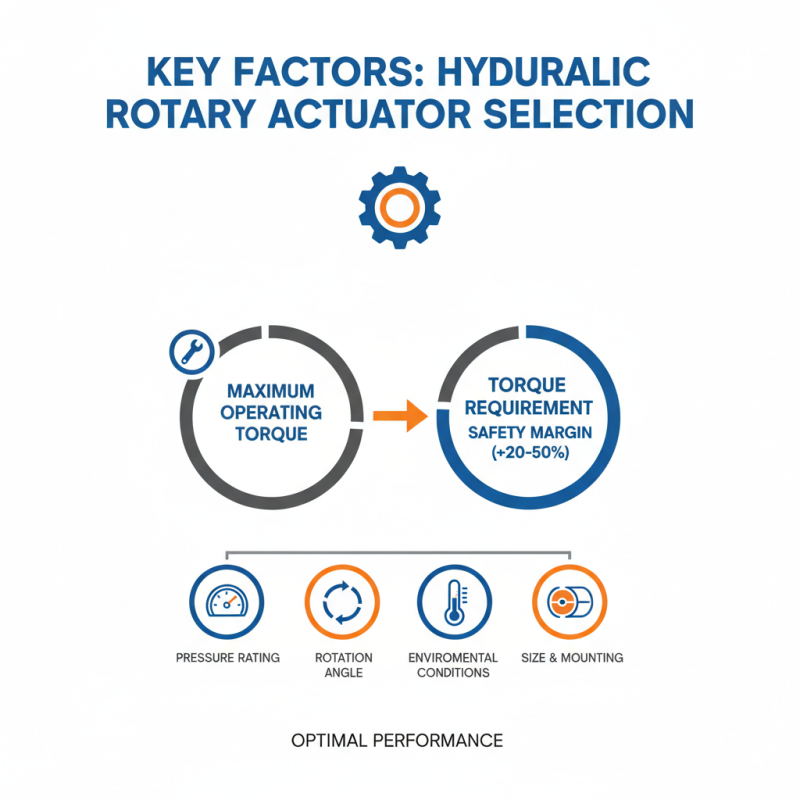
Choosing the right hydraulic rotary actuator is crucial for ensuring optimal performance in various applications. One key factor to consider is the torque requirement. Evaluating the maximum torque needed for your specific task will help narrow down your options. It's essential to factor in additional torque for safety margins, as often, the initial estimate might not suffice under all operating conditions.
Another important aspect is the mounting style. Different projects require different configurations. Understand your system layout and the limitations of space. This insight will aid in selecting an actuator that fits seamlessly into your design. Pay attention to the hydraulic fluid's viscosity as well; it affects actuator efficiency.
Finally, think about maintenance needs. Some actuators require regular upkeep, while others are more self-sufficient. Reflect on your operational capabilities and the resources available for maintenance. Choosing an actuator with an optimal balance of functionality and ease of care can prevent future headaches. It’s worth pondering if a more complex actuator is genuinely necessary. Sometimes, simplicity can lead to increased reliability.
Comparing Different Types of Hydraulic Rotary Actuators
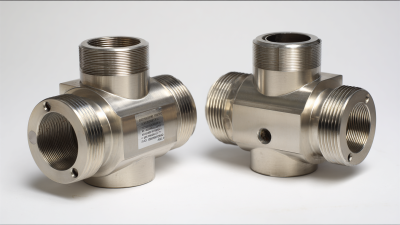
When selecting a hydraulic rotary actuator, understanding the different types available is crucial. There are several variants, such as rack and pinion, vane, and rotary piston actuators. Each type serves specific applications and offers unique advantages. For instance, rack and pinion actuators are known for their high torque output and precision, making them suitable for industrial automation. In contrast, vane actuators provide faster response times but may have limitations in high-load applications.
Research indicates that the demand for hydraulic rotary actuators is growing, projected to reach $5.6 billion by 2026, according to a recent industry report. It highlights the increasing reliance on hydraulic systems across various sectors, including manufacturing and construction. This growth shows the need for careful consideration of the actuator type based on application requirements.
Tips: Always evaluate the operating conditions before making a choice. Factors like temperature, load capacity, and speed play significant roles. A well-suited actuator can enhance efficiency. Also, consider maintenance needs. Some designs may require more upkeep, affecting longevity. Balanced insights can lead to better decisions in actuator selection, improving overall system performance.
Comparison of Different Types of Hydraulic Rotary Actuators
Assessing Performance Specifications and Requirements
When selecting a hydraulic rotary actuator, performance specifications play a critical role. The actuator’s torque rating must match your application. For example, an actuator with a torque capacity of 100 Nm can handle load requirements for most medium-duty tasks. However, if your application demands higher performance, you may need a model rated at 500 Nm or more.
Consider the speed and responsiveness metrics. Effective hydraulic actuators should operate within specified speed ranges, typically 20 to 100 degrees per second. A report by the International Fluid Power Society indicates that precision in hydraulic systems directly impacts operational efficiency. Therefore, assessing speed requirements helps ensure that the actuator fits project timelines.
Environmental conditions should not be overlooked. Temperature ranges, for instance, can vary from -20 °C to 80 °C in many hydraulic systems. Failing to choose an actuator that suits these environmental factors may lead to premature failure. Reflecting on the specific conditions of your application ensures longevity and reliability of your systems. Careful assessment of these specifications can ultimately refine your actuator selection, providing enhanced performance where it matters most.
Exploring Installation and Maintenance Considerations for Actuators
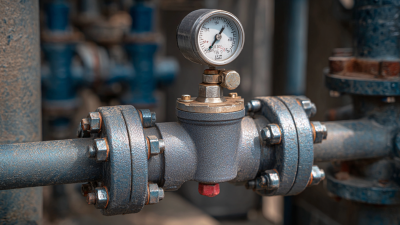
When selecting a hydraulic rotary actuator, installation and maintenance are often overlooked. It's essential to consider how the actuator will fit into your system. Ensure sufficient space for installation while allowing for easy access to the actuator for maintenance. A report from the International Society of Automation highlights that over 30% of equipment failures can be traced back to improper installation. Optimizing your installation process can greatly enhance the longevity and reliability of your actuator.
Maintenance is another critical area that demands attention. Regular checks of hydraulic fluid levels and inspecting seals for leaks can prevent significant downtime. According to a study by the American Society of Mechanical Engineers, improper maintenance can decrease actuator lifespan by up to 50%. Establishing a routine maintenance schedule may seem tedious but is vital. The costs of neglect can outweigh the benefits of proactive upkeep. Choosing an actuator with a user-friendly maintenance design can simplify this process. Evaluate your needs and focus on accessibility during both installation and routine maintenance.