
Back
Contact us

10 Tips for Buying Galvanized Steel Square Pipe?

Buying Galvanized Steel Square Pipe looks straightforward until a project exposes the wrong coating, size, or supplier. A pipe may appear bright and uniform, yet its zinc layer can vary significantly. Wall thickness, corner dimensions, welding quality, and storage conditions all affect service life. Small details matter.

Corrosion engineer Dr. John R. Scully offers a useful principle: “Corrosion control should be designed into a product, not added as an afterthought.” That idea guides these ten practical buying tips. Start by defining the application, load, environment, and expected lifespan. Indoor framing needs differ from fencing near saltwater or outdoor structural supports. Check the required grade, outside dimensions, wall thickness, and dimensional tolerance. Then confirm whether the pipe meets the relevant ASTM specification, such as ASTM A500 for structural tubing or ASTM A53 for certain piping applications.

Ask how the pipe was galvanized. Hot-dip galvanizing, coating weight, surface preparation, and post-treatment can influence performance. Request mill test certificates, coating inspection records, and traceable batch information. Look closely at cut ends, weld seams, corners, and drainage holes. These areas often reveal poor preparation or uneven protection.

Do not ignore logistics. Measure bundle length, packaging, rust staining, and delivery conditions. A reliable supplier should answer technical questions clearly. Some buyers focus only on price. That can be a costly mistake. I would also challenge one common assumption: thicker zinc does not automatically solve every design problem. Compatibility, drainage, handling, and installation still matter. Use the ten tips as a working checklist, not a rigid formula. Real projects sometimes require expert review.
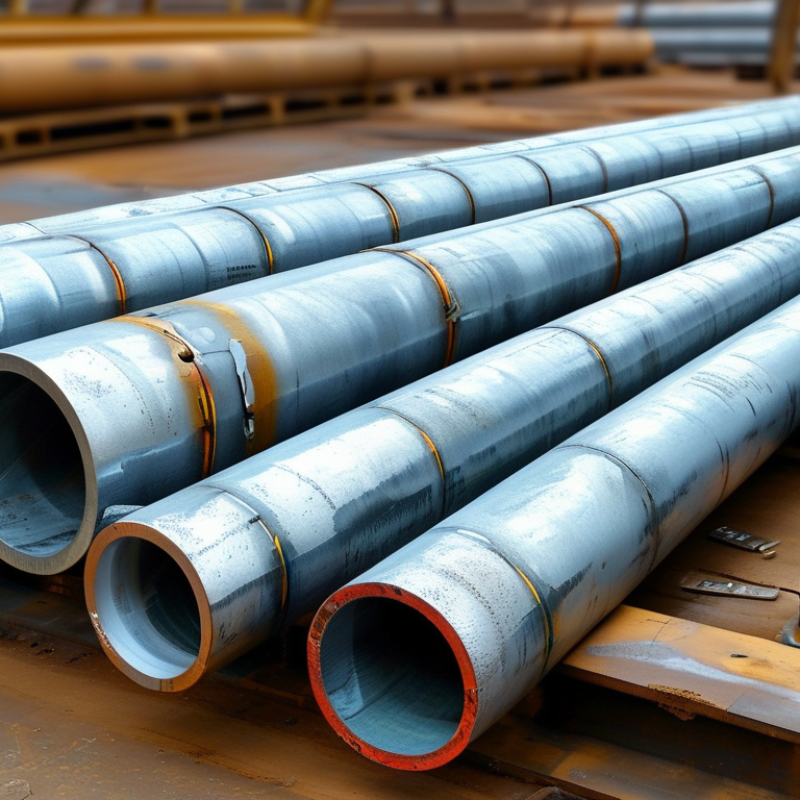
10 Tips for Buying Galvanized Steel Square Pipe?

Define Square Pipe Grades: ASTM A500 Grade B Offers 315 MPa Yield Strength

When buying galvanized steel square pipe, identify the structural grade before comparing prices. ASTM A500 Grade B provides a minimum yield strength of 315 MPa and a minimum tensile strength of 400 MPa. That strength suits many frames, supports, guardrails, and general construction members. However, the grade alone does not confirm performance.

Check the mill test certificate carefully. It should identify ASTM A500, Grade B, chemistry, heat number, dimensions, and test results. Measure the outside width and wall thickness with calipers. Nominal sizes can hide small differences. A 100 mm square tube with a thinner wall may look identical but carry less load. Inspect the zinc coating for bare spots, heavy runs, and damaged corners. Look closely.

Ask whether galvanizing occurred before or after tube fabrication. Post-fabrication coating usually protects cut edges and weld areas more completely. Also confirm straightness, end squareness, length tolerance, and packaging. Wet storage can create white rust beneath tight bundles. It is not always structural failure, but it deserves attention.

In practical inspections, documentation often receives less attention than appearance. That is a mistake. A bright surface does not prove Grade B steel. I have also seen buyers focus on yield strength while ignoring wall thickness and connection design. The 315 MPa value matters only when the complete section, load path, and fabrication details are suitable. A qualified engineer should review critical applications. Even a small mismatch can become expensive.

10 Tips for Buying Galvanized Steel Square Pipe? - Define Square Pipe Grades: ASTM A500 Grade B Offers 315 MPa Yield Strength
No. Buying Tip Specification or Data to Check Why It Matters Recommended Verification
1 Define the required steel grade ASTM A500 Grade B has a minimum yield strength of 315 MPa (46 ksi) and a minimum tensile strength of 400 MPa (58 ksi). The grade determines the minimum strength used for structural design and load calculations. Request the material test certificate and confirm the standard designation, grade, yield strength, and tensile strength.
2 Confirm the correct product standard ASTM A500/A500M covers cold-formed welded and seamless carbon structural tubing in round, square, and rectangular shapes. A product can look similar while being manufactured to a different standard with different mechanical and dimensional requirements. Check that the purchase order, mill certificate, and product markings show the required ASTM standard and grade.
3 Select the nominal outside dimensions Common nominal square sizes include 25.4 × 25.4 mm, 50.8 × 50.8 mm, 76.2 × 76.2 mm, and 101.6 × 101.6 mm. The outside dimensions affect fit, section properties, connection details, and overall structural capacity. Specify the outside width and height in millimetres or inches, and do not rely only on informal size descriptions.
4 Choose the correct wall thickness Examples include 2.0 mm, 3.0 mm, and 3.2 mm; a nominal 50.8 × 50.8 × 3.2 mm section is approximately 2 × 2 × 1/8 in. Wall thickness affects axial capacity, buckling resistance, welding performance, weight, and corrosion allowance. Measure thickness with a calibrated micrometer and state whether the requested value is nominal or measured minimum thickness.
5 Check the galvanizing method and coating Hot-dip galvanizing creates a zinc-iron alloy coating; the specified coating requirement should identify the applicable galvanizing standard and coating mass or thickness. Coating thickness and uniformity strongly influence corrosion protection and service life. Request a coating inspection report and verify coating thickness at representative locations using a calibrated gauge.
6 Inspect surface quality and zinc coverage Look for bare spots, excessive runs, sharp zinc buildup, peeling, blisters, deep scratches, and red rust. Surface defects can reduce corrosion protection and create problems during handling, assembly, or painting. Perform a visual inspection under adequate lighting and document any rejected or repaired areas.
7 Verify straightness and squareness Check longitudinal straightness, corner squareness, twist, and flatness against the tolerances specified in the applicable product standard. Dimensional distortion can affect alignment, joint fit-up, column behavior, and fabrication accuracy. Use a straightedge, square, calibrated tape, and feeler gauge or other documented inspection method.
8 Review weld condition and corner geometry Square tubing may be welded or seamless; inspect the weld area, corner radius, continuity, and visible cracking or undercut. Weld quality and corner geometry influence connection design, fatigue performance, and usable internal dimensions. Request the manufacturing route and applicable inspection records; visually inspect weld seams before fabrication.
9 Confirm length, quantity, and weight Define cut length, length tolerance, bundle quantity, unit system, and whether weight is calculated from nominal dimensions or measured mass. Clear quantity and delivery data prevent shortages, excess material, freight disputes, and cutting losses. Compare the packing list with random length measurements and weigh samples when mass control is required.
10 Check documentation and handling requirements Required documents may include the material test certificate, galvanizing certificate, dimensional inspection report, packing list, and traceability records. Complete documentation supports quality acceptance, structural compliance, traceability, and future maintenance. Match heat numbers, bundle marks, certificates, and purchase-order requirements before accepting the shipment.

Compare Hot-Dip and Electro-Galvanizing: Baths Reach About 450°C

Tip: Match the galvanizing method to the pipe’s working environment. Hot-dip galvanizing immerses cleaned steel in molten zinc, with baths reaching about 450°C. The zinc forms a metallurgical bond and usually creates a thicker, tougher coating. It suits outdoor frames, fencing, agricultural equipment, and damp service areas.

Electro-galvanizing deposits zinc through an electrical process in an aqueous solution. It does not use a molten zinc bath. The coating is thinner and smoother, which can help when appearance, tight tolerances, or easy fabrication matter. However, it may provide less long-term protection in harsh outdoor exposure. Check the actual coating mass, not only the product description.

Tip: Inspect the square pipe before purchasing. Look for continuous coverage around corners, clean weld areas, and sealed ends. Cut edges can expose bare steel, so ask how those areas are protected. Measure wall thickness and outside dimensions with calipers. Hot-dip processing can slightly affect dimensions, although the change may be acceptable.

In my own checks, I once focused too much on a bright surface. That was a mistake. Surface shine does not prove coating thickness. Request test records, applicable standards, and corrosion requirements from the supplier. Also review straightness and internal zinc buildup. A smooth electro-galvanized pipe may fit better, but a thicker hot-dip coating can be the safer choice outdoors. Temperature, handling, and poor storage still matter.

Verify Size, Wall Thickness, and ASTM A500 Dimensional Tolerances

10 Tips for Buying Galvanized Steel Square Pipe?

Before approving galvanized steel square pipe, measure the actual outside dimensions. Use a calibrated vernier caliper or steel tape, and check several points along each length. ASTM A500 dimensional tolerances apply to specified sizes, not casual visual estimates. For many square tubes, outside dimensions are commonly limited to about ±0.5%. Always confirm the current standard edition and applicable product table.

Wall thickness needs equal attention. Measure away from corners, where forming and galvanizing can affect readings. ASTM A500 commonly allows a negative wall-thickness tolerance of about 10%, but the purchase specification may require tighter control. A pipe marked 3 mm should not be accepted solely because its average reading looks close. Check the thinnest location. That detail matters.

Inspect the corners, too. Excessive radius can reduce usable contact area and interfere with fittings. Confirm straightness, squareness, length, grade, and coating condition against the mill certificate and order documents. Ask for heat numbers that match the delivered bundle. Keep photos and measurement records. Small records protect big decisions.

A common mistake is measuring one convenient section and trusting it. I have found that rushed checks miss local thinning and size variation. Recheck doubtful pieces with a second instrument. ASTM A500 compliance supports confidence, but it does not replace receiving inspection. Good documentation is part of the product.

10 Tips for Buying Galvanized Steel Square Pipe

Verify the nominal size, wall thickness, and applicable ASTM A500 dimensional tolerances before accepting galvanized square tubing.

The chart shows representative ASTM A500 outside-dimension tolerances for square or rectangular tubing. The size deviation is converted from inch tolerances to millimeters, while wall-thickness deviation is shown as the ASTM A500 allowance of ±10% of nominal wall thickness. Confirm the current standard edition, measurement method, galvanizing requirements, and purchase specification before inspection.

Assess Zinc Coating Mass and Corrosion Protection Under ISO 1461

10 Tips for Buying Galvanized Steel Square Pipe?

Zinc coating mass deserves more attention than surface brightness. Under ISO 1461, structural steel thicker than 6 mm should reach an average coating mass of 610 g/m² and a local minimum of 505 g/m². These values equal approximately 85 μm and 70 μm in thickness. For 3–6 mm steel, the requirements fall to 505 g/m² average and 395 g/m² local. Always match the test result with the pipe wall thickness.

Ask for the batch certificate. It should identify the inspection lot, sampling method, coating mass, and local thickness readings. A magnetic gauge can reveal thin areas, but surface appearance cannot. Dull grey zinc may still perform well. Shiny zinc may hide uneven coverage. It happens. Edge zones, weld areas, and internal corners deserve close inspection because coating coverage can vary there. The International Zinc Association reports that zinc generally corrodes far more slowly than bare steel, often by 10 to 100 times, depending on exposure conditions.

Consider the service environment before accepting a quoted coating value. Salt spray, standing water, acidic drainage, and trapped moisture can shorten protection life. ISO 1461 compliance is a useful baseline, not a lifetime guarantee. I would also check cut ends and drilled holes, because later fabrication can expose steel. Protect those areas according to the project specification. An inexpensive pipe with uncertain coating data may become expensive after installation.

Match Load Capacity, Welding Needs, and Project Safety Factors

Buying galvanized steel square pipe starts with the real load, not the outside dimensions. Calculate dead, live, wind, impact, and equipment loads using ASCE 7-22 load combinations. Then check bending, shear, local buckling, and connection strength under AISC 360-22 provisions. A thicker wall often improves capacity, but a longer span can reduce it sharply. Do not treat a catalog load as a design approval.

Welding changes the decision. Remove galvanizing near the weld zone, provide cross-ventilation, and control fumes with suitable local exhaust. OSHA Table Z-1 lists a 5 mg/m³ permissible exposure limit for zinc oxide fumes. Welders also need training and task-specific respiratory protection when exposure assessment requires it. ASTM A500 can define the tube’s mechanical requirements, while ASTM A123 addresses hot-dip galvanized coatings after fabrication. Confirm both documents before purchasing.

Small details matter. A 3 mm wall may look substantial, yet poor end connections can govern failure. I have seen projects specify a pipe by size alone, then discover unexpected deflection during installation. That mistake deserves review. Ask for mill certificates, yield strength, wall-thickness tolerance, coating records, and a stamped design when the pipe supports people, vehicles, or suspended equipment. Safety factors must match the project’s risk, not a convenient rule of thumb.