
Back
Contact us

China Top 10 Deep Drill Machine Manufacturers?

Choosing the right Deep Drill Machine manufacturer requires more than comparing horsepower, drilling depth, or brochure photographs. This introduction examines ten leading companies through practical and technical criteria. These include machine accuracy, spindle stability, drilling diameter, automation, cooling systems, maintenance access, and after-sales support.

The comparison also considers real operating conditions. A factory may need a machine that drills long, narrow holes through hardened steel. Another buyer may prioritize flexible tooling, low vibration, or reliable cycle times. Small details matter. A poorly positioned control panel can slow production. Weak chip removal can damage tools and reduce hole quality. Energy use also deserves attention, although manufacturers do not always publish comparable figures.

Dr. Robert F. Bauer, a drilling-technology specialist, offers a useful field principle: “A drilling machine is judged by the hole it produces, not by its advertised power.” This idea guides the selection process. The strongest brand is not automatically the best choice for every workshop. Rankings can change as models, service networks, and regional support develop. Public information is also uneven. Some manufacturers disclose detailed test data, while others provide limited technical evidence.

Therefore, this China Top 10 Deep Drill Machine Manufacturers overview balances documented specifications with engineering judgment. It looks at manufacturing experience, quality control, customization capability, delivery performance, and user support. Readers should still verify current models, certification records, installation requirements, and local service capacity before purchasing. A careful comparison may reveal an uncomfortable truth: the cheapest machine can become the most expensive after repeated downtime.
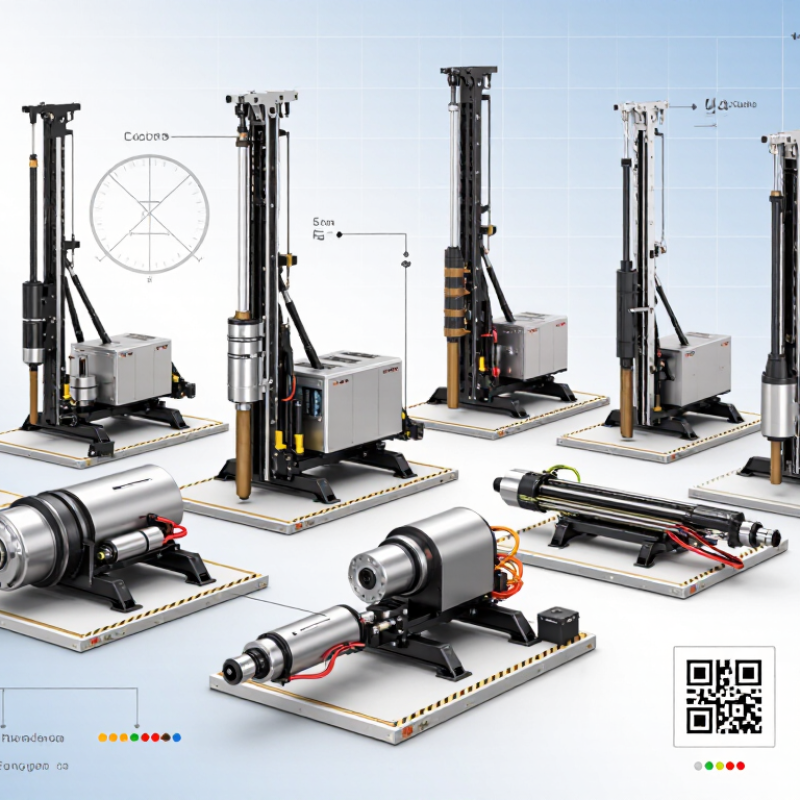
China Top 10 Deep Drill Machine Manufacturers?

What Is a Deep Drill Machine?

A deep drill machine creates accurately aligned holes that are much deeper than their diameter. In practice, manufacturers often classify a hole as “deep” when its depth-to-diameter ratio exceeds 10:1. The boundary is not perfectly fixed. Material, tool design, and coolant pressure also matter.

Unlike a standard drilling machine, a deep drilling system controls chip evacuation through high-pressure coolant or a drilled passage inside the tool. Common methods include gun drilling, BTA drilling, and ejector drilling. These systems support long components such as hydraulic cylinders, mold bases, shafts, and energy equipment. According to the 2024 World Machine Tool Survey by Gardner Intelligence, China remains the world’s largest machine-tool consumer by market value. That scale increases demand for stable accuracy, automation, and repeatable production. The 2024 ISO 230-1 standard also highlights positioning accuracy and repeatability as critical performance measures for machine tools.

Tips: Check the depth-to-diameter ratio before choosing a machine. Confirm coolant pressure, spindle speed, tool support, and chip removal capacity. A machine may reach the required depth but still produce a poor hole. We often see this mistake in early planning. Test drilling on the actual material is wiser than relying only on catalog figures. Evaluate straightness, surface finish, cycle time, and operator access together.

China Top 10 Deep Drill Machine Manufacturers? - What Is a Deep Drill Machine?

A deep drill machine is a specialized machine tool designed to produce accurate, straight, and deep holes with a high length-to-diameter ratio. The specifications below represent typical industry ranges for deep-hole drilling equipment available in China; exact values vary by machine model and configuration.
No. Deep Drilling Machine Configuration Typical Drilling Method Typical Hole Diameter Typical Drilling Depth Workpiece Length Capacity Typical Spindle Speed Suitable Materials Common Applications
1 Single-Spindle Gun Drilling Machine Gun drilling with high-pressure internal coolant 1.5–30 mm Up to 1,000 mm Up to 1,200 mm 1,000–8,000 rpm Steel, stainless steel, aluminum, copper alloys Hydraulic components, dies, shafts, precision holes
2 Multi-Spindle Gun Drilling Machine Parallel gun drilling using multiple spindles 2–25 mm Up to 800 mm Up to 1,000 mm 1,500–6,000 rpm Carbon steel, alloy steel, non-ferrous metals Batch production, manifolds, mold components
3 BTA Deep-Hole Drilling Machine Boring and trepanning association drilling 20–200 mm Up to 6,000 mm Up to 7,000 mm 80–1,200 rpm Large steel forgings, alloy steel, cast iron Oil cylinders, large shafts, power-generation parts
4 Deep-Hole Boring and Honing Machine BTA boring followed by precision honing 30–500 mm Up to 8,000 mm Up to 9,000 mm 40–800 rpm Hardened steel, carbon steel, cast iron Hydraulic cylinders, sleeves, precision tubes
5 CNC Deep-Hole Drilling Center CNC-controlled gun drilling and milling 2–40 mm Up to 1,500 mm Up to 1,800 mm 2,000–10,000 rpm Tool steel, stainless steel, aluminum alloys Mold plates, aerospace parts, precision tooling
6 Horizontal Deep-Hole Drilling Lathe Rotating workpiece with a stationary or rotating tool 10–250 mm Up to 5,000 mm Up to 6,000 mm 50–1,500 rpm Steel, cast iron, bronze, aluminum Long shafts, rollers, barrels, tubular components
7 Vertical Deep-Hole Drilling Machine Vertical drilling with gravity-assisted chip removal 10–100 mm Up to 2,000 mm Up to 2,500 mm 100–3,000 rpm Steel, stainless steel, brass, aluminum Die blocks, engine components, vertical mold plates
8 Deep-Hole Trepanning Machine Trepanning with an annular cutting tool 80–600 mm Up to 10,000 mm Up to 11,000 mm 20–400 rpm Large steel forgings and heavy alloy components Large tubes, pressure vessels, heavy machinery parts
9 Special-Purpose Mold Deep Drilling Machine Multi-axis gun drilling for mold channels 1.5–35 mm Up to 1,200 mm Up to 1,500 mm 2,000–12,000 rpm Pre-hardened steel, tool steel, stainless steel Injection molds, die-casting molds, cooling channels
10 Heavy-Duty CNC Deep-Hole Drilling System CNC-controlled BTA drilling, boring, and turning 30–400 mm Up to 12,000 mm Up to 13,000 mm 30–1,000 rpm Large forgings, alloy steel, cast iron Energy equipment, shipbuilding, mining and construction machinery
Selection criteria: When comparing deep drilling equipment, evaluate hole diameter, drilling depth, workpiece size, positional accuracy, spindle power, coolant pressure, chip evacuation, CNC control, automation level, and after-sales service.

Key Types of Deep Drill Machines Made in China

China’s deep drill machine sector covers several specialized designs, not one universal platform. Gun drilling suits small holes, often below 40 millimeters, with high-pressure coolant flowing through the tool. It is common for hydraulic blocks, molds, and precision shafts. BTA machines handle larger diameters and remove chips through the drill head. Their cutting action resembles a controlled tunnel boring process.

Ejector drilling uses a twin-tube system, making it useful when coolant recovery and chip evacuation need stable control. Trepanning machines remove a ring-shaped core instead of cutting the entire hole. This reduces material waste in large-diameter workpieces. CNC deep-hole boring machines can combine drilling, boring, and honing, which helps reduce repositioning errors. That detail matters.

According to Fortune Business Insights, the global machine tools market reached about USD 86.92 billion in 2023, reflecting strong demand for automated metalworking equipment. A 2024 report from the China Machine Tool Industry Association also highlights continued investment in CNC production and intelligent manufacturing. These figures do not prove that every Chinese machine offers equal performance. That assumption is often wrong. Buyers should compare spindle rigidity, coolant pressure, hole straightness, vibration control, and after-sales response. In practice, a machine drilling a 1,200-millimeter steel shaft needs different support from one processing a 20-millimeter mold channel. Brochure figures can look impressive, yet real workshop trials may reveal heat distortion, slower chip removal, or inconsistent surface finish.

How to Evaluate Chinese Deep Drill Machine Manufacturers

Evaluating Chinese deep drill machine manufacturers requires more than comparing catalog prices. Start with the drilling task: hole diameter, maximum depth, material hardness, required tolerance, and production volume. A manufacturer should explain how its machine handles these conditions, not simply promise high performance. Ask for spindle speed ranges, coolant pressure, guide-bushing design, chip removal methods, and positioning accuracy.

Request a live factory video or an in-person audit. Inspect machining areas, assembly records, calibration tools, and final testing procedures. Ask to see a completed machine drilling a similar workpiece. The sound of the spindle matters. So does the stability of the cutting fluid during a long cycle. Check whether inspection reports include measured values, not only pass-or-fail statements. Independent certifications can support credibility, but they do not replace practical testing.

Reliable suppliers provide clear drawings, electrical specifications, spare-parts lists, installation instructions, and warranty terms. Confirm who handles remote troubleshooting and how quickly replacement parts can be shipped. Contact recent overseas customers when possible, especially those using comparable materials. A low quotation may hide weak training or expensive modifications. No factory is perfect. I would record small gaps honestly, such as delayed replies or unclear tolerances, because these details often become larger problems after payment. A sample test may still fail to represent continuous production, so define acceptance criteria before signing the contract.

China’s Top 10 Deep Drill Machine Manufacturers

China’s Top 10 Deep Drill Machine Manufacturers

China’s top 10 deep drill machine manufacturers are best evaluated through engineering evidence, not advertising claims. A reliable comparison should examine spindle accuracy, drilling depth, coolant pressure, automation, and after-sales response. Grand View Research valued the global machine tools market at approximately USD 86.65 billion in 2023, with continued growth expected through 2030. This expansion increases demand for stable deep-hole systems in molds, hydraulic parts, aerospace components, and energy equipment.

The leading Chinese suppliers usually provide gun drilling, BTA drilling, and combined drilling-and-boring systems. Practical buyers should inspect test results for hole straightness, surface roughness, and repeatability. A machine drilling a 2,000-millimeter steel channel needs rigid guideways, filtered coolant, and accurate chip removal. Small details matter. CMTBA industry statistics also show China remains a major machine-tool production base, supported by broad domestic supply chains and strong export activity.

However, “top 10” rankings are rarely absolute. Public data often combines ordinary machine tools with specialized deep drilling equipment. That weakens direct comparison. My assessment would therefore give greater weight to verified installations, measured cycle times, training quality, and spare-parts availability. Some suppliers look impressive in brochures but provide limited evidence under real cutting conditions. Buyers should request sample machining, inspect unfinished surfaces, and question maintenance costs. The list is useful, but not perfect.

China’s Top 10 Deep Drill Machine Manufacturers

Technical capability reference for deep-hole drilling equipment commonly produced and supplied in China. The chart compares typical process diameter ranges rather than ranking individual companies or brands.

Typical industry ranges: gun drilling is generally used for smaller precision holes, BTA and ejector drilling cover medium-to-large diameters, while trepanning is suitable for very large holes. Actual specifications vary by machine model, tooling, material, and workpiece length.

Applications and Selection Factors for Deep Drilling Equipment

Deep drill machines support oil and gas components, hydraulic cylinders, aerospace parts, and long steel shafts. They create accurate, deep holes with controlled diameter and surface finish. In production, a machine may drill through a 1.5-meter shaft while coolant carries chips away. Some systems also handle gun drilling, BTA drilling, and trepanning. Each method suits different diameters, materials, and production volumes.

Selection should begin with the workpiece, not the machine catalogue. Check drilling depth, hole diameter, tolerance, concentricity, spindle speed, and available floor space.

Coolant pressure and filtration deserve close attention, especially when machining stainless steel or hardened alloys. A rigid bed reduces vibration. Reliable chip removal protects both tools and operators.

Ask manufacturers for test-cut records, maintenance plans, training details, and documented quality controls. My early evaluations focused too heavily on spindle power. That was a mistake. Tool stability and service response often affected results more.

Tips: Test the machine with your actual material and drill length. Measure hole straightness after cooling, not immediately. Confirm electrical requirements before installation.

Review spare-part availability and response times in writing. Do not trust impressive specifications alone.

A practical factory visit can reveal noise, vibration, coolant leaks, and uncomfortable access points. These details are easy to miss during a polished demonstration.